Food presentation is an essential aspect of gastronomy that elevates a meal from mere sustenance to an enjoyable dining experience. The art of food presentation transforms simple dishes into visual masterpieces, engaging the senses and enhancing the overall culinary journey. Attention to detail in plating and garnishing can significantly influence a diner’s perception and enjoyment.
Chefs and home cooks alike can benefit from understanding the principles of food presentation. Techniques such as balancing colours, creating height, and thoughtfully choosing plates can make a significant difference in how a dish is received. This skill not only reflects creativity but also respect for ingredients and the effort put into the meal.
Incorporating the art of food presentation into meal preparation can inspire chefs to experiment and innovate. A beautifully presented dish invites diners to savour not just the flavours but also the visual appeal. This synergy between aesthetics and taste ultimately enriches the entire dining experience.
Fundamentals of Food Presentation
Food presentation involves careful attention to details that enhance visual appeal, composition, and ingredient quality. Achieving a balance among these elements creates a delightful experience that engages all senses.
Visual Appeal and Composition
Visual appeal is crucial in food presentation. The arrangement of food on the plate can greatly influence perception. Strategies include the use of negative space, which gives a balanced look. Presentation techniques such as stacking, layering, or fanning components can also enhance interest.
Composition should consider various shapes and sizes. For instance, using a round plate can create a sense of harmony. Plating designs can follow rules such as the Rule of Thirds, ensuring that the focus points guide the viewer’s eye across the plate.
The Role of Colour and Texture
Colour and texture play significant roles in food presentation. Vibrant colours not only attract attention but can also signify freshness and flavour. A mix of colours can create visual excitement. For example, a dish with greens, bright reds, and yellows can appear more appetising.
Texture adds depth to the presentation. Combining smooth, crispy, and creamy elements elevates a dish beyond just taste. Incorporating garnishes or sauces can provide contrasting textures that enhance the overall visual delight, making the food more inviting.
Importance of Quality Ingredients
Quality ingredients are foundational to effective food presentation. Fresh, high-quality components ensure that the dish not only looks appealing but also tastes excellent. The visual characteristics of ingredients, such as the sheen of fresh seafood or the vibrant hues of ripe vegetables, contribute to aesthetic value.
Using seasonal and locally sourced ingredients can enhance flavour profiles and presentation. When chefs prioritise quality, the final dish reflects care and attention, making it more enticing. A well-presented dish acts as an invitation to enjoy the culinary experience it offers.
Plating Techniques
Effective plating techniques enhance the dining experience by transforming a meal into a visual delight. Key aspects include selecting the appropriate plate, establishing a focal point, balancing proportions with negative space, and using layering and textural contrasts.
Selecting the Right Plate
Choosing the right plate is crucial in food presentation. Ideally, the plate should complement the food’s colours and shapes. White plates are a popular choice as they allow the dish to stand out without distractions.
Other options include coloured or patterned plates, but these should be used with care to avoid overwhelming the food. The size of the plate also matters; a large plate can make a small portion look sparse, while a small plate can create a sense of abundance with a modest serving.
Creating a Focal Point
A focal point draws the diner’s eye towards a specific element on the plate. This can be achieved by positioning the star ingredient at the centre or at a slight angle. Using bright colours or unique shapes can help emphasise this focal point.
Moreover, garnishes can enhance the focal element without overpowering it. Careful placement of sauces or purees around the dish can also guide attention. Everything on the plate should work in harmony to support this primary visual element.
Balancing Proportions and Negative Space
Proportions and negative space play a vital role in painting. Achieving balance involves considering the relationship between the food and the plate, ensuring neither dominates the other.
Negative space—empty areas surrounding the food—creates a clean look and allows the dish to breathe. This technique helps in making the presentation feel less cluttered. The ideal composition uses negative space strategically to highlight the food, making it more appealing while also maintaining a clear view of each element.
Layering and Textural Contrasts
Layering adds depth and dimension to a plate. Combining various heights can create visual interest and invite exploration. This can involve stacking ingredients or using elements with contrasting textures.
For example, a smooth purée may be paired with crispy garnishes to create a delightful contrast. Different textures engage the palate and enhance the dining experience. The careful arrangement of these elements encourages diners to appreciate both the visual and sensory qualities of the meal.
Enhancing the Sensory Experience
Enhancing the sensory experience involves engaging sight, touch, and taste through thoughtful presentation techniques. Key elements such as garnishes, sauces, and creative plating can elevate a dish, transforming a meal into a visual spectacle.
Garnishes and Edible Decorations
Garnishing plays a crucial role in food presentation. Fresh herbs, edible flowers, and microgreens can add vibrant colours and textures. For instance, a sprinkle of citrus zest not only enhances the aroma but also adds visual appeal.
Using garnishes thoughtfully can create layers of interest. Small additions like colourful edible flowers can brighten a dish, while fresh herbs can provide a contrasting texture. Each garnish should complement the main ingredient to ensure a harmonious presentation.
It’s essential to consider the serving dish as well. A carefully chosen plate can accentuate the dish’s colours and contribute to the overall aesthetic.
Sauces and Drizzling Techniques
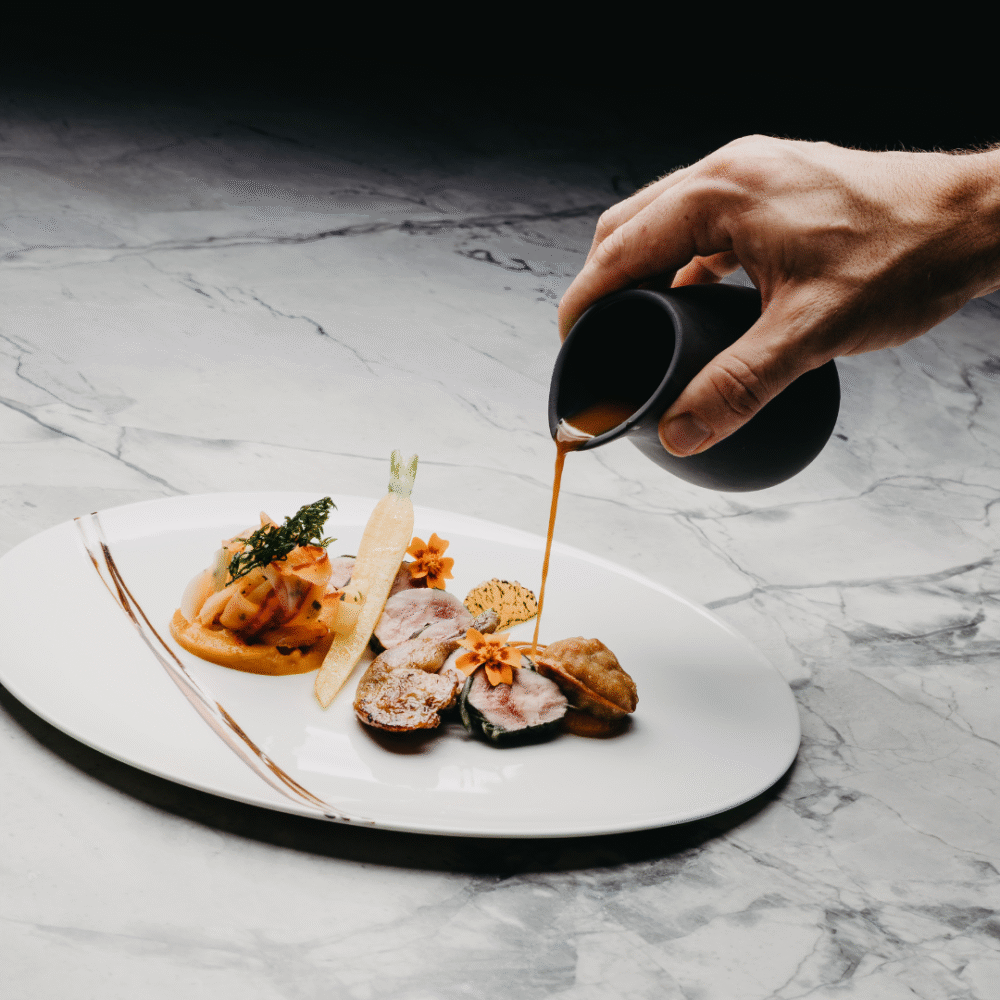
The use of sauces can transform a simple dish into an artistic creation. Techniques such as drizzling, pooling, or smearing allow for a variety of visual effects.
Choosing the right sauce is critical. For example, a rich balsamic reduction can provide depth, while lively sauces like pesto can add freshness. The distribution of sauce should be strategic, ensuring it enhances rather than overpowers the main components.
When drizzling, tools like squeeze bottles or spoons can create precise patterns. This technique adds artistic flair, allowing for creativity and playfulness in presentation.
Creative Presentation Styles
Creative food presentation styles focus on both aesthetics and functionality. One effective approach is plating in clusters or various heights, which can create visual interest and dimension.
Utilising different plate styles—such as a rustic wooden board or a minimalist white plate—can significantly alter the perception of a dish.
Elements like negative space should be considered; leaving portions of the plate empty can make the food stand out more prominently. A well-presented dish invites curiosity and appreciation, making the meal more enjoyable.
Best Practices for Food Presentation
Effective food presentation elevates the culinary experience through thoughtful techniques. Key aspects include maintaining simplicity and cleanliness, utilising contrast and balance, and employing specific tips for professional results.
Simplicity and Cleanliness
Creating a visually appealing plate starts with simplicity. A clutter-free presentation allows the dish’s elements to shine. By focusing on key ingredients, the viewer can appreciate each one’s unique qualities.
Cleanliness is also vital. Any splashes or smudges can detract from the aesthetic. It is advisable to use a clean cloth to wipe the edges of the plate for a polished look. A neatly arranged plate inspires appetites and sets the stage for the meal.
Incorporating Contrast and Balance
Contrast can significantly enhance food presentation. By integrating contrasting colours and textures, a dish becomes more vibrant. For example, pairing deep greens with bright reds can create an eye-catching display.
Balance is equally important. An even distribution of elements helps maintain visual harmony. Placing a crunchy element next to a soft feature can create an appealing textural contrast. Landscape plating techniques, where food is arranged to mimic natural scenery, add depth and interest.
Tips and Techniques for Professional Results
To achieve a polished look, a few specific techniques can be employed. First, consider the plate choice; a simple white plate often works best to highlight the food’s colours.
Using tools such as squeeze bottles for sauces allows for precision while plating. Additionally, layering ingredients thoughtfully can enhance visual appeal. For example, stacking components or placing items at varying heights can create depth.
Incorporating garnishes thoughtfully adds sophistication. A small herb sprig or an edible flower can bring a touch of elegance without overwhelming the dish. This attention to detail enhances the overall presentation without complicating it.