
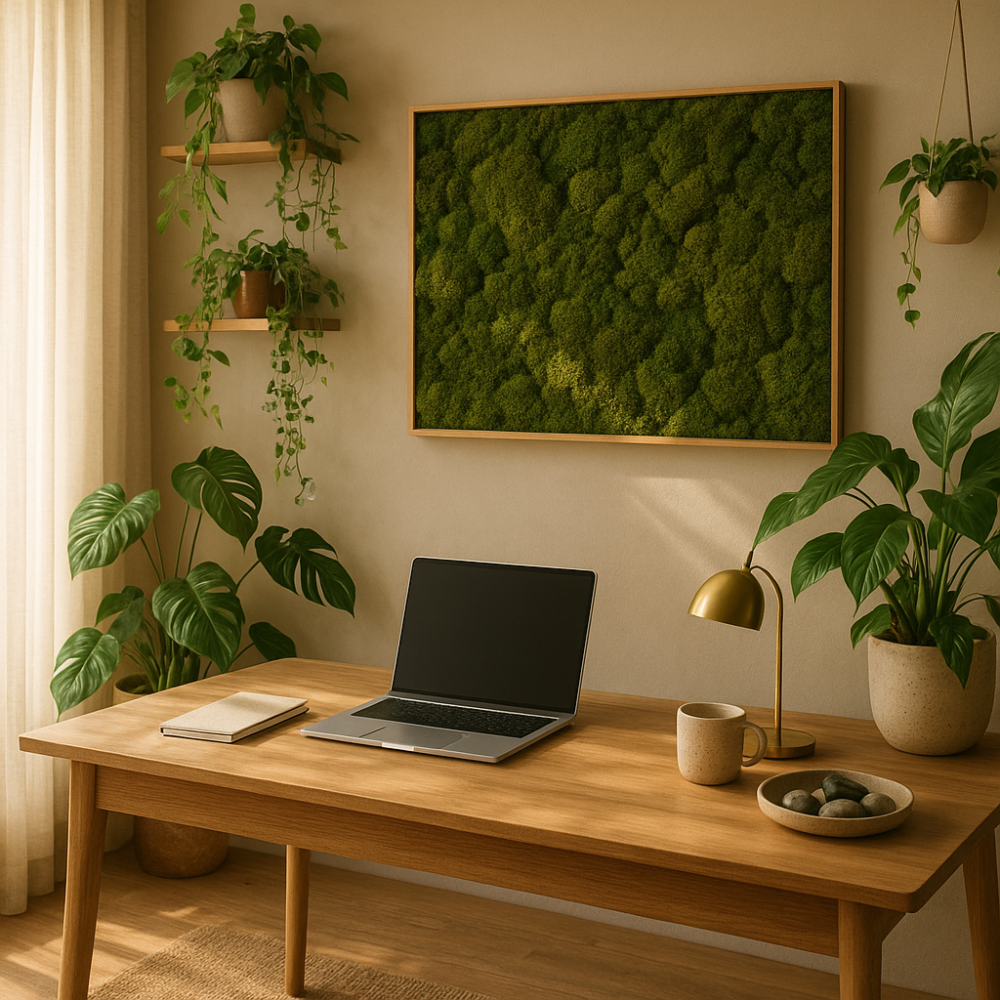
There’s something almost instinctive about the way a sunlit room with a few leafy plants makes you feel more alive, more focused, more human. That’s not coincidence — it’s biology. Humans evolved over millions of years in natural environments, and our nervous systems still respond powerfully to nature’s cues. Biophilic design taps into that deep-rooted connection, and when applied thoughtfully to a home office, it can genuinely change the way you think, feel, and work.
Whether you’re working from a dedicated study or a corner of the living room, bringing biophilic principles into your workspace doesn’t require a complete renovation or a limitless budget. It’s about making intentional choices — about light, texture, living things, and the subtle sensory experiences that remind your brain it’s not trapped inside a grey box.
What Is Biophilic Design, Really?
At its core, biophilic design is the practice of incorporating elements of the natural world into built environments. The term comes from Edward O. Wilson’s concept of “biophilia” — the innate human affinity for other living systems. When designers apply this to architecture and interiors, they’re essentially asking: how do we make this space feel less artificial?
It goes well beyond placing a pot plant on a desk. True biophilic design considers how natural light moves through a space, how air flows, what materials surfaces are made from, whether there are views to the outside world, and even how sound and smell contribute to a sense of being connected to something larger than four walls.
Research consistently backs this up. A study published in the Journal of Environmental Psychology found that workers in environments with natural elements reported a 15% higher level of wellbeing and a 6% boost in productivity. The World Green Building Council has also highlighted strong links between biophilic office environments and reduced stress, improved focus, and lower absenteeism.
The Three Pillars of Biophilic Design
One of the most useful frameworks for understanding biophilic design comes from Stephen Kellert, who identified three core categories that encompass how humans experience nature in the built environment:
1. Nature in the Space
This is the most direct expression of biophilia — the physical presence of living or natural elements within the room. Think plants, water features, natural materials like wood and stone, fresh air, and even the sight of animals through a garden window. These are tangible, sensory connections to the living world.
2. Natural Analogues
These are indirect representations of nature — things that evoke natural forms without being literally alive. Botanical prints, organic patterns in textiles, furniture with flowing curves inspired by natural shapes, or the grain of a wooden desk all fall into this category. They satisfy the brain’s hunger for natural patterns even when real nature isn’t present.
3. Nature of the Space
This pillar is about spatial qualities that echo natural environments — prospect and refuge (the feeling of being able to see far whilst also feeling sheltered), complexity, mystery, and risk/peril in the Kellert sense. A workspace positioned beside a window with a view, for instance, gives a sense of prospect. A cosy, enclosed reading nook evokes refuge. Both together create a space that feels deeply comfortable.
How to Incorporate Biophilic Design in Your Home Office
The good news is that you don’t need to redesign your entire home to reap the benefits. There are meaningful changes you can make at every budget level, from small styling tweaks to more considered structural adjustments.
Prioritise Natural Light
Light is arguably the single most important element in biophilic design. Exposure to natural daylight regulates your circadian rhythm, improves mood, and reduces eye strain during long working hours. If possible, position your desk so that light comes from the side rather than directly behind or in front of your screen to avoid glare.
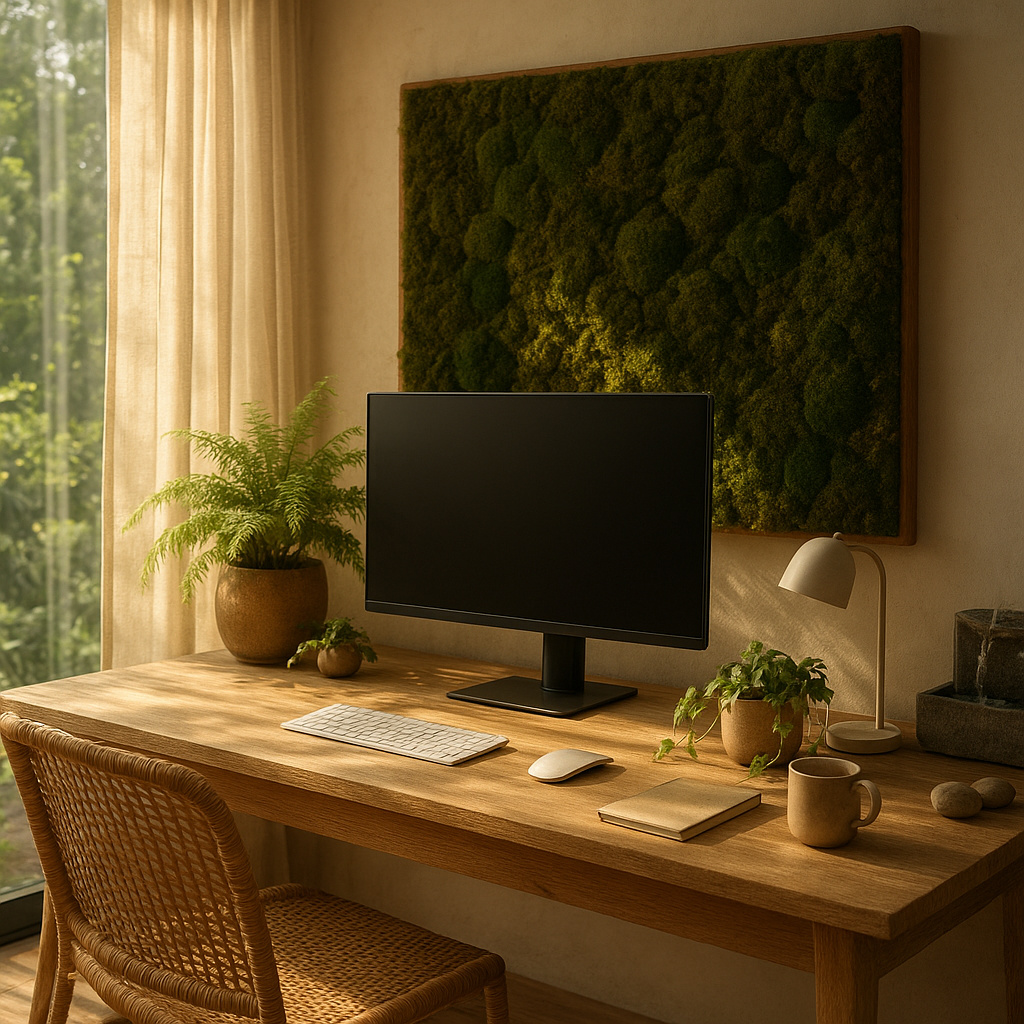
If your home office doesn’t have much access to natural light, consider full-spectrum light bulbs that mimic daylight. While they’re not a perfect substitute, they’re a significant improvement over cold overhead fluorescents. Mirrors can also be used strategically to bounce what natural light does exist further into the room.
Bring in Living Plants
This is probably the first thing that comes to mind when people think of biophilic design — and for good reason. Plants do an extraordinary amount of heavy lifting in a workspace. They improve air quality, introduce humidity into often-dry heated rooms, provide visual relief from screens, and create a genuine sense of calm.
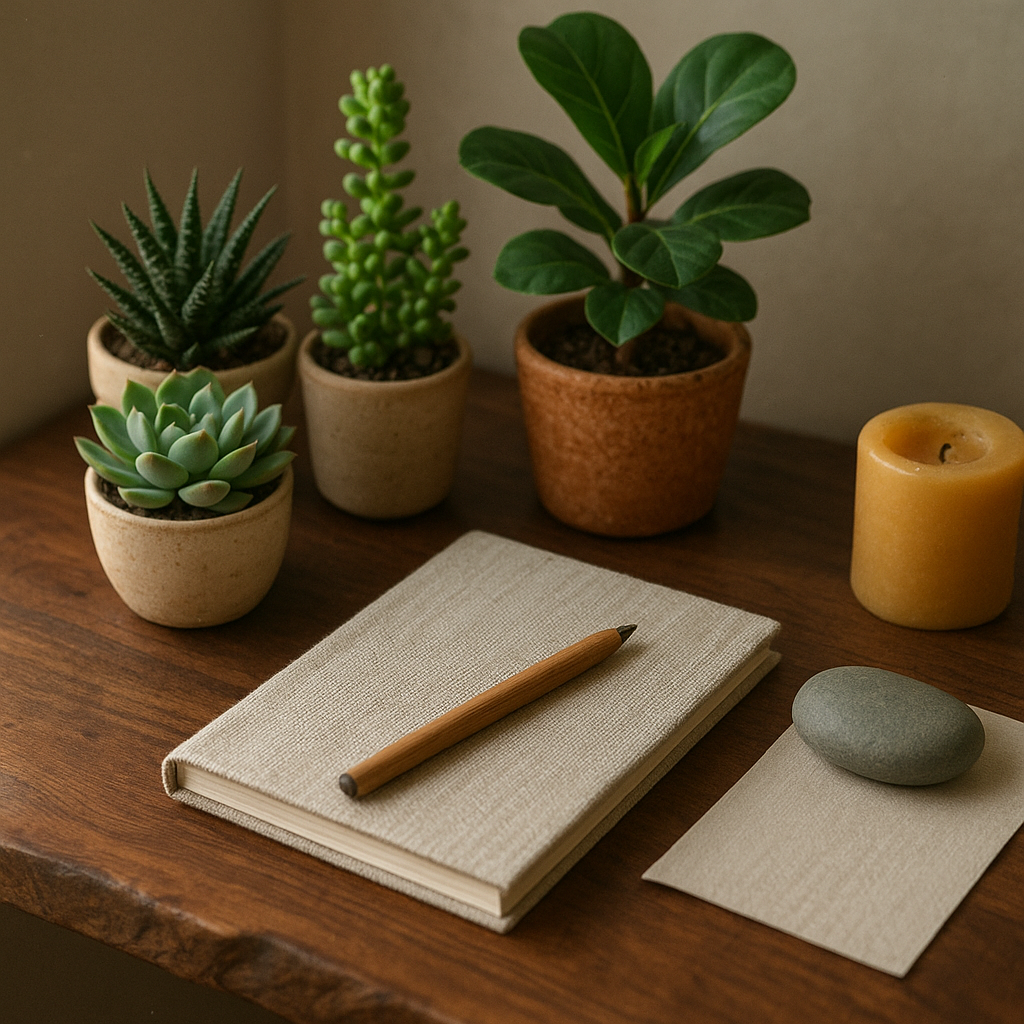
For a home office, consider a mix of plant sizes and types. A tall fiddle-leaf fig or snake plant can act as a natural room divider or fill an empty corner, whilst smaller plants like pothos, ferns, or succulents can live happily on the desk itself. The key is choosing species that suit your light conditions and your honest assessment of your own plant-care habits.
- Low light options: ZZ plant, cast iron plant, peace lily
- Bright indirect light: Monstera, pothos, spider plant
- Direct sun: Aloe vera, cacti, herbs like rosemary and basil
- Air-purifying standouts: Snake plant, spider plant, rubber tree
Choose Natural Materials
The textures and materials that surround you while you work have a significant impact on how grounded you feel. Swap out plastic storage bins for wicker or bamboo baskets. Choose a desk made from solid wood rather than laminate. Add a jute or wool rug underfoot. Layer in linen or cotton cushions on your office chair.
These aren’t just aesthetic choices — they engage your tactile senses in a way that synthetic materials simply don’t. There’s a reason a wooden surface feels more satisfying to work at than a plastic one; your nervous system genuinely registers the difference. The way your environment is arranged and what it’s made from can quietly shape your mental wellbeing in ways that are easy to underestimate.
Incorporate Water Elements
The sound of flowing water has been shown to reduce cortisol levels and promote a state of calm alertness — exactly what you want when you’re trying to concentrate. A small desktop water fountain is an accessible way to introduce this element without taking up much space. Beyond sound, even the visual presence of water (a glass bowl, an aquarium, artwork depicting rivers or seas) can have a mild but measurable calming effect.
Create a View or Evoke One
Wherever possible, position your workspace so you have a view to the outside — even if that view is just a small garden, a window box of herbs, or a tree across the street. Research by Dr. Roger Ulrich has shown that even brief exposure to natural views reduces stress and improves recovery from mental fatigue.
If your office has no window with a useful view, consider large-scale nature photography or botanical murals on the wall opposite your desk. It’s not the same as a real view, but it activates similar neural pathways when designed with enough detail and depth.
Biophilic Design Examples for Specific Home Office Challenges
Small or Windowless Offices
A lack of natural light and space doesn’t make biophilic design impossible — it just makes it more creative. Vertical gardens (even small ones on a single wall panel) can introduce significant greenery without using floor space. Grow lights styled to look like pendant lamps can serve double duty. Earth tones — warm terracottas, sage greens, soft ochres — on walls and furnishings can evoke the outdoors even in the absence of windows.
Shared Spaces
Many people work from a corner of a living room or bedroom, where the office needs to coexist with other functions. Here, biophilic design can actually help with the psychological transition between “work mode” and “home mode.” A plant-filled shelf or a natural room divider like a bamboo screen can visually delineate the workspace whilst keeping the whole room feeling cohesive and calm. The same principles that make a kitchen feel warm and welcoming — natural textures, considered lighting, living elements — translate just as effectively to a shared working space.
The Acoustics Problem
Open-plan homes can be noisy, and noise is a significant productivity killer. Biophilic design offers some surprisingly effective solutions here. Dense plants (particularly larger leafy varieties) absorb sound. Soft natural materials — wool rugs, cotton curtains, upholstered furniture — reduce echo and reverberation. Even a small water feature can mask distracting background noise with a more neutral, natural soundscape.
Understanding the 14 Patterns of Biophilic Design
For those who want to go deeper, the research firm Terrapin Bright Green developed a framework known as the 14 Patterns of Biophilic Design. These patterns provide a more granular toolkit for designers and homeowners alike. They include elements such as:
- Visual connection with nature — views to plants, landscapes, or the sky
- Non-visual connection with nature — sounds, smells, and touch of natural elements
- Non-rhythmic sensory stimuli — unpredictable natural movements like flickering leaves
- Thermal and airflow variability — subtle changes in temperature and air movement
- Presence of water — hearing, seeing, or touching water
- Dynamic and diffuse light — light that changes quality and direction over time
- Connection with natural systems — awareness of seasonal and diurnal cycles
- Biomorphic forms and patterns — shapes and textures found in nature
- Material connection with nature — natural materials in their minimally processed state
- Complexity and order — rich sensory information organised around a spatial hierarchy
- Prospect — an unobstructed view over a distance
- Refuge — a sheltered, protected place for withdrawal
- Mystery — the promise of more information through partial obscurement
- Risk/peril — a credible threat paired with a reliable safeguard
You won’t incorporate all 14 into a home office, but working through the list is a useful exercise for identifying which elements are missing from your current space and which small changes might make the biggest difference.
The Benefits Are More Than Aesthetic
It’s worth being clear about why this matters beyond simply making a space look nicer. The evidence for biophilic design’s impact on cognitive performance is compelling. A study from the University of Exeter found that enriching a lean (minimalist, bare) office space with plants improved memory retention and performance on basic tests by up to 20%. A Harvard study connected better ventilation and natural elements to significantly improved cognitive function scores across several metrics.
For people working from home — often in spaces not specifically designed for productive work — these gains are particularly meaningful. Reduced anxiety, better focus, greater creativity, and improved mood aren’t trivial outcomes. They’re the difference between dreading your desk and actually wanting to sit at it.
Bringing It All Together
Biophilic design in a home office isn’t a single project with a finish line — it’s an ongoing, evolving relationship between you and your space. It might start with a plant or two and a repositioned desk, and gradually grow to include natural materials, a considered colour palette, and a water feature that makes afternoon video calls feel slightly less exhausting.
The underlying principle is simple: your brain works better when it feels connected to the natural world. A home office informed by biophilic design principles isn’t just a prettier place to work — it’s a more human one. And that, for most people logging long hours at a screen, makes all the difference.
To summarise the key principles worth keeping in mind: maximise natural light wherever possible, introduce living plants suited to your conditions, choose natural materials over synthetic ones, consider how sound and air quality affect your comfort, and think about the spatial qualities of prospect and refuge that make a space feel instinctively right. Start with one or two changes, observe how they affect your experience of the space, and build from there.