

There’s a reason walking into a tidy room can feel like taking a deep breath. It’s not just aesthetic — something genuinely shifts in the mind when the physical space around you is calm and ordered. Yet for many people, the connection between the state of their home and the state of their mental health goes largely unexamined. We tidy up when guests are coming, we have a big clear-out when things feel overwhelming, but we rarely stop to consider the ongoing, quiet relationship between our surroundings and our psychological wellbeing.
This article explores that relationship in depth — why clutter weighs on us mentally, how organisation can support emotional resilience, and what small, realistic changes can make a meaningful difference to how you feel at home every single day.
The Science Behind Clutter and Stress
It might seem dramatic to suggest that a pile of unread post or a chaotic wardrobe could affect your mental health. But research consistently supports this link. A study published in the journal Personality and Social Psychology Bulletin found that women who described their homes as cluttered or unfinished had higher levels of cortisol — the body’s primary stress hormone — throughout the day compared to those who described their homes as restful and restorative.
Cortisol, when chronically elevated, is associated with anxiety, disrupted sleep, poor concentration, and even lowered immune function. In other words, the background hum of visual disorder isn’t just mildly annoying — it can have real physiological consequences.
A separate piece of research published in Current Psychology, which explored associations between clutter and wellbeing, found that clutter was linked to higher levels of procrastination, difficulty focusing, and a general sense of feeling overwhelmed. Perhaps most tellingly, participants reported that clutter made them feel out of control — a feeling that sits at the heart of anxiety.
Why the Brain Finds Disorder Draining
The human brain is wired to process visual information constantly. When your environment is cluttered, your brain is essentially bombarded with competing stimuli — every object is a small demand on your attention, even if you’re not consciously aware of it. Neuroscientists at Princeton University found that physical clutter in your surroundings competes for your attention, reducing your ability to focus and increasing cognitive load.
This is sometimes called “decision fatigue by environment” — your mental resources are being quietly depleted just by being in a disorganised space, before you’ve even started your day. Over time, this can erode mood, patience, and motivation in ways that are easy to mistake for personality traits rather than environmental responses.
How Organisation Supports Mental Wellbeing
Understanding the problem is one thing — but what does the flip side look like? When spaces are organised thoughtfully, the psychological benefits are equally real and backed by evidence.
A Sense of Control and Agency
One of the most consistent findings in psychology is that a sense of control over one’s environment is fundamental to mental health. When your home is organised, you make decisions intentionally — where things live, how spaces are used, what comes in and what goes out. This sense of agency, even over small things, reinforces a broader feeling of competence and self-efficacy.

For people managing anxiety or depression, this can be particularly significant. The act of organising — deciding, sorting, placing — is a concrete, achievable task with a visible result. That feedback loop of action and outcome can be genuinely grounding when other areas of life feel uncertain or unmanageable.
Better Sleep and Physical Rest
Your bedroom environment has a disproportionate impact on your mental health simply because of how many hours you spend there and what that space is meant to facilitate: rest and recovery. Research from the National Sleep Foundation has found that people who make their bed each morning report better quality sleep at night — not because bed-making is magical, but because it signals order and intention in the space where the brain needs to switch off. Pairing this kind of intentional morning behaviour with an organised environment can reinforce a powerful sense of daily structure.
A cluttered bedroom, by contrast, keeps the visual cortex stimulated and the stress response subtly active. Piles of clothes, stacked items, and general disorder are associated with lighter, more interrupted sleep — which, of course, then worsens mood, concentration, and emotional regulation the following day.
Reduced Anxiety and Overwhelm
Disorganisation rarely stays contained to the physical. When you can’t find things, when your home requires constant reactive management, and when you feel behind on basic domestic tasks, the psychological burden accumulates. Many people describe a persistent low-level anxiety — a sense that something needs doing, even when they’re trying to relax.
Organisation doesn’t eliminate life’s stressors, but it can significantly reduce the number of small, nagging ones. Knowing where your keys are, having a system for bills, keeping a clear kitchen counter — these things remove friction from daily life and free up cognitive and emotional bandwidth for what actually matters. Combining an organised space with simple mindfulness practices can further reduce that background hum of stress in a meaningful way.
The Extended Self: Why Our Homes Reflect Our Inner World
Psychologist Russell Belk introduced the concept of the “extended self” — the idea that our possessions and environments are an extension of our identity. This has profound implications for how we think about home organisation. Our homes aren’t just containers for our stuff; they’re reflections of who we believe we are and what we value.
When our homes are chaotic, many people internalise this as personal failure — a sign that they can’t cope, can’t keep up, or aren’t managing adulthood properly. This self-critical narrative can compound feelings of shame and low self-worth. Conversely, creating an organised, intentional home environment can reinforce a positive self-concept: “I am someone who takes care of my space and, by extension, myself.”
This is why decluttering and organising often feels so emotionally charged — because it is. Letting go of objects, creating systems, and reshaping spaces are all acts of self-definition.
Practical Steps That Actually Make a Difference
Grand overhauls are rarely sustainable. The most meaningful, lasting improvements to home organisation tend to come from small, consistent habits rather than one dramatic clear-out weekend. Here are approaches that are both realistic and genuinely impactful:
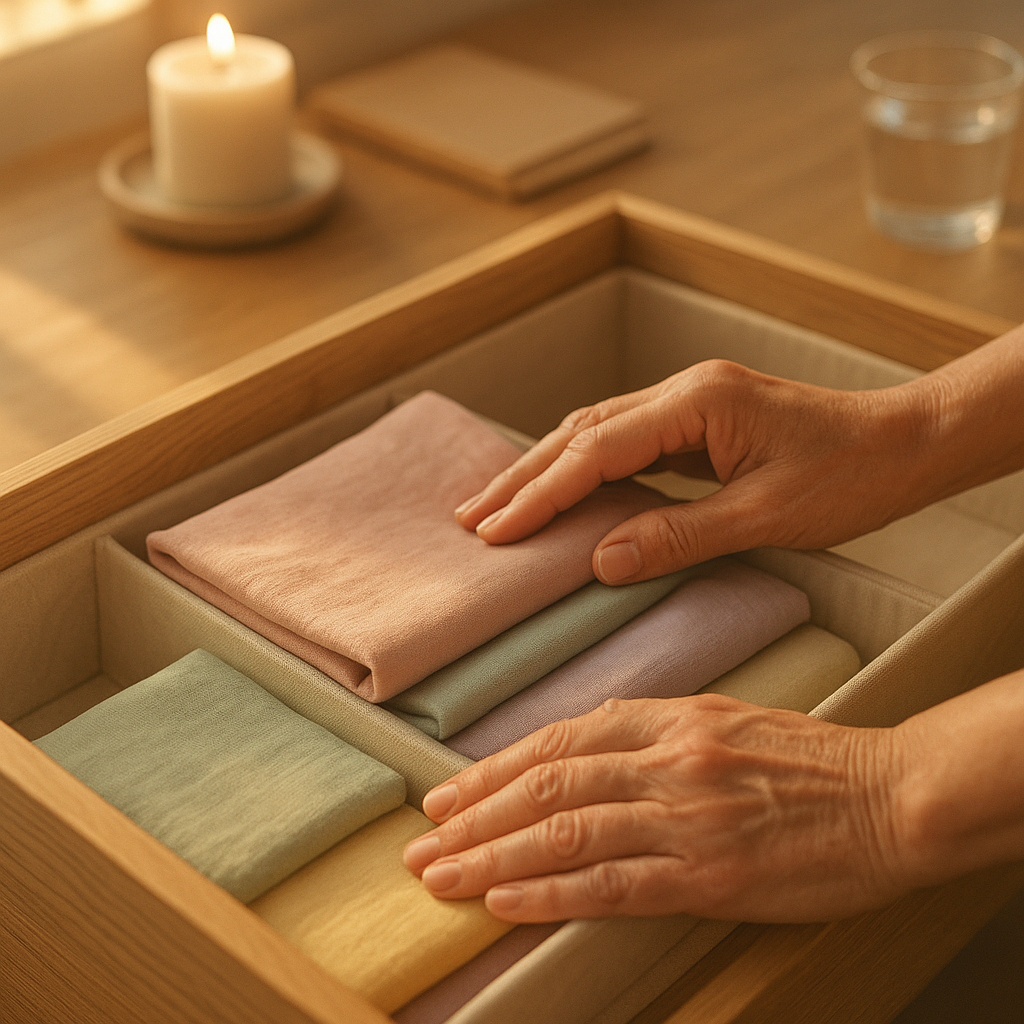
- Start with the spaces you use first. The bedroom and kitchen have the highest daily impact on mood. Prioritise these before tackling less-frequented areas.
- Adopt the “one in, one out” rule. For every new item brought into the home, one similar item leaves. This prevents slow accumulation without requiring constant purging.
- Create a landing zone. A designated spot near the front door for keys, bags, and post removes the chaos of searching for essentials and sets a calm tone each time you arrive home.
- Tidy in short, regular bursts. Ten minutes of tidying before bed is far more sustainable than sporadic three-hour sessions. Routine reduces resistance.
- Give everything a home. Clutter often accumulates because items don’t have a designated place. Once everything has a specific location, tidying becomes straightforward rather than effortful decision-making.
- Approach decluttering with compassion, not judgement. The goal isn’t a magazine-worthy home; it’s a space that supports how you want to feel. Progress matters more than perfection.
Organisation for Mental Health: Does the Order Matter?
A question that often comes up is whether any particular approach to organisation — such as the KonMari method, minimalism, or category-based systems — is more beneficial for mental health than others. The honest answer is that the best system is the one that works for your brain and your life.
For some people, visual organisation — where everything is visible and accessible — reduces anxiety. For others, hidden storage and clear surfaces are more calming. There is no universally correct approach. What matters is intentionality: choosing how your space works for you, rather than allowing it to happen to you by default.
When Clutter Signals Something Deeper
It’s important to acknowledge that for some people, difficulty maintaining an organised home is itself a symptom of a mental health challenge rather than a cause of one. Depression, ADHD, grief, trauma, and anxiety disorders can all profoundly affect a person’s capacity to manage their environment. In these cases, the solution is not simply to “tidy up” — it requires addressing the underlying condition with appropriate support.
If the state of your home feels completely unmanageable despite your best efforts, and this is accompanied by persistent low mood, difficulty functioning, or feelings of hopelessness, speaking with a GP or mental health professional is the most important step — not reorganising the kitchen cupboards.
Organisation is a tool for wellbeing, not a measure of worth. It’s worth keeping that distinction clear.
Conclusion: Small Changes, Lasting Impact
The relationship between home organisation and mental wellbeing is not about aesthetics or aspiration — it’s rooted in how the brain processes its environment, how chronic low-level stress accumulates, and how our physical surroundings shape our sense of self and control. Clutter quietly drains cognitive resources, elevates stress hormones, and can reinforce feelings of being overwhelmed. Organisation, by contrast, can support better sleep, reduced anxiety, greater focus, and a stronger sense of personal agency.
None of this requires a perfect home. It requires an intentional one — a space designed, however simply, to support how you want to live and feel. The smallest changes, made consistently, can shift the emotional atmosphere of a home in ways that extend well beyond the rooms themselves. And sometimes, the quietest improvements to our mental health begin not with grand gestures, but with clearing a surface, finding a system, and giving ourselves a space that genuinely feels like rest.