

Stress has become so woven into the fabric of daily life that many people have stopped noticing how much of it they’re actually carrying. The tight shoulders, the racing thoughts before bed, the irritability that surfaces over small inconveniences — these aren’t just personality quirks. They’re signals. And while stress will never disappear entirely (nor should it — some stress is genuinely useful), the way we relate to it can change dramatically. That’s where mindfulness comes in.
Mindfulness isn’t a wellness trend that requires a retreat in Bali or an hour of silent meditation every morning. At its core, it’s simply the practice of paying deliberate, non-judgemental attention to what’s happening right now — in your body, your thoughts, and your surroundings. It sounds almost too simple to work. But the research behind it is surprisingly robust, and the shifts it can create in everyday life are far more concrete than most people expect.
What Does the Research Actually Say?
Before getting into the practical side, it’s worth understanding why mindfulness has attracted so much scientific interest. A study published in Frontiers in Psychology found a significant association between mindfulness practice and lower perceived stress levels, along with higher wellbeing scores across a range of participants. Meanwhile, Jon Kabat-Zinn’s Mindfulness-Based Stress Reduction (MBSR) programme — developed at the University of Massachusetts in the late 1970s — has been studied extensively, with consistent findings showing reductions in anxiety, depression, and chronic pain.
What’s particularly interesting is that mindfulness doesn’t work by making life easier. It works by changing how the brain processes difficulty. Regular practice has been shown to reduce activity in the amygdala — the brain’s threat-detection centre — and strengthen the prefrontal cortex, which governs rational thought and emotional regulation. In plain terms: the stressed, reactive version of you gradually gives way to a calmer, more measured one.
Why Small Shifts Matter More Than Grand Gestures
One of the biggest misconceptions about mindfulness is that it requires significant chunks of dedicated time. In reality, the people who sustain a mindfulness practice long-term tend to be those who weave small moments of awareness into their existing routines rather than treating it as an additional task on an already overwhelming to-do list.
Think about the cumulative weight of hundreds of tiny unconscious moments each day — scrolling your phone on autopilot, eating lunch whilst answering emails, driving home with your mind already at tomorrow’s meeting. These aren’t just missed opportunities for rest; they’re actually fuelling the stress cycle. Each one represents a moment where the mind is elsewhere, generating anxious thoughts about the future or ruminating on the past.
Small, intentional shifts interrupt that cycle. They don’t require willpower in the way a new diet or exercise regime does. They simply ask for a few seconds of attention, repeated consistently.
Practical Mindfulness Exercises to Reduce Stress
1. The 5-4-3-2-1 Grounding Technique
This exercise is particularly effective during moments of acute stress or anxiety. It works by pulling attention firmly into the present moment through the senses. Here’s how it works:
- 5 things you can see — look around and name them, either mentally or aloud
- 4 things you can physically feel — the weight of your feet on the floor, the texture of your clothing, the temperature of the air
- 3 things you can hear — traffic, birdsong, the hum of a refrigerator
- 2 things you can smell — even faint or neutral scents count
- 1 thing you can taste — a sip of water or coffee works perfectly
The entire process takes under two minutes and can be done anywhere — at your desk, on public transport, or in a supermarket queue. Its effectiveness lies in how it redirects a spiralling mind back to the body’s immediate experience.
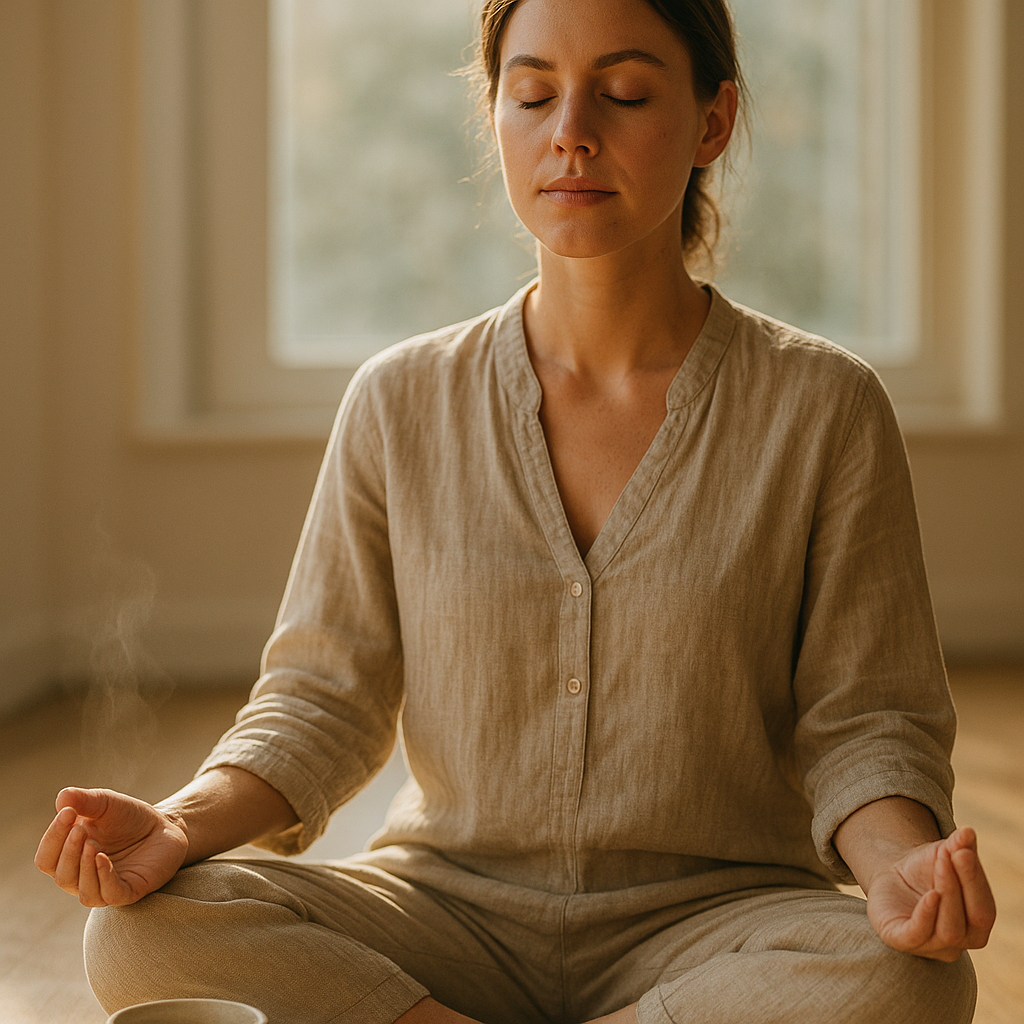
2. Mindful Breathing (Without the Fuss)
Controlled breathing is one of the most evidence-backed ways to activate the parasympathetic nervous system — the body’s natural “rest and digest” response that counteracts the stress-driven “fight or flight” state. You don’t need a specific posture or a quiet room.
Try this: breathe in for a count of four, hold for four, breathe out for six. The longer exhale is key — it signals to the nervous system that there’s no immediate threat. Practise this for just five breath cycles during a stressful moment, and most people notice a measurable shift in how they feel within about ninety seconds.
3. Single-Tasking as a Mindfulness Practice
Multitasking is often worn as a badge of honour, but the evidence suggests it’s largely a myth — the brain doesn’t truly do two things at once; it rapidly switches between them, which is cognitively exhausting and actually increases cortisol levels. Single-tasking, by contrast, is quietly revolutionary.
Choose one task. Close the other tabs. Put your phone face down. For even fifteen minutes, give one thing your complete attention. Notice what it feels like to be fully present with a single activity. Many people find this mildly uncomfortable at first, which is itself revealing — it shows just how habituated the mind has become to constant stimulation.
4. The Mindful Minute
Set a timer for sixty seconds, once a day, at a random point during your afternoon. When it goes off, stop whatever you’re doing and simply observe: What is your body doing right now? Are you holding tension anywhere? What thoughts were running through your mind a moment ago? How are you feeling emotionally?
This isn’t about changing anything. It’s purely about noticing. Over time, this brief daily check-in builds the habit of self-awareness that is the true foundation of any stress management practice.
Integrating Mindfulness Into Daily Life
Anchoring Awareness to Routine Activities
One of the most effective strategies is to attach mindful awareness to things you already do every single day. Brushing your teeth. Making a cup of tea. Walking from the car to the office. These activities are usually done on autopilot — which means they’re an untapped resource.
Pick just one routine activity and commit to doing it mindfully for a week. Notice the sensation of the water when washing up. Pay attention to the smell and warmth of your morning coffee before checking your phone. Feel your feet making contact with the ground when you walk. These aren’t dramatic lifestyle changes, but their cumulative effect on stress levels and overall presence can be genuinely surprising.
Managing the Inner Critic with Mindful Awareness
A significant portion of daily stress doesn’t come from external events — it comes from the commentary running in the background of the mind. Self-criticism, catastrophising, replaying difficult conversations. Mindfulness doesn’t silence this voice, but it does change your relationship to it.

When you notice a particularly harsh or anxious thought, try mentally labelling it: “There’s a worried thought” or “That’s my inner critic.” This simple act of labelling creates a small but meaningful distance between you and the thought — a moment of perspective that reduces its emotional grip. Neuroscientists refer to this as “affect labelling,” and studies have shown it actually reduces activity in the amygdala.
Common Questions About Mindfulness and Stress
How quickly does mindfulness reduce stress?
Some people notice immediate benefits — a sense of calm after a short breathing exercise, for instance. But more lasting changes typically emerge after a few weeks of consistent practice. Research on MBSR programmes, which usually run over eight weeks, shows meaningful reductions in perceived stress by the programme’s end. The key is regularity over intensity; five minutes daily will outperform an hour once a week.
Can mindfulness be practised without meditation?
Absolutely. Formal meditation is one vehicle for mindfulness, but it’s far from the only one. Mindful walking, mindful eating, mindful conversation — any activity done with deliberate, non-judgemental attention qualifies. Many people find meditation too challenging initially and benefit from starting with informal practices before attempting to sit in silence.
Is mindfulness suitable for everyone?
For most people, mindfulness practices are safe and beneficial. However, individuals who have experienced trauma may sometimes find certain types of inward-focused attention distressing. In those cases, a more outward, sensory-focused approach — such as grounding techniques or mindful movement — tends to be better tolerated. Anyone with significant mental health concerns should speak with a qualified healthcare professional before starting any new practice.
Building a Sustainable Practice
Sustainability is the word that often gets overlooked in conversations about mindfulness. Starting is easy. Maintaining something when life gets busy — which is precisely when it’s most needed — is harder. A few principles that seem to genuinely help:
- Start embarrassingly small. Two minutes of mindful breathing is a real practice. It’s also easier to honour than a thirty-minute commitment that gets skipped when the alarm doesn’t go off.
- Let go of perfection. A distracted meditation session still counts. The noticing of distraction is the practice. Judging yourself for not being mindful enough is somewhat missing the point.
- Use prompts and reminders. A sticky note on the kettle, a recurring phone reminder, a particular song you always play mindfully on the commute. Environmental cues are far more reliable than willpower alone.
- Be curious rather than prescriptive. Approach each practice session with genuine interest in what you notice, rather than comparing it to how it “should” feel.
Conclusion
Mindfulness isn’t a magic solution, and it won’t eliminate the sources of stress in your life. What it can do — and does, with consistent practice — is change the way those stressors land. The space between a trigger and a reaction widens. The nervous system becomes less hair-trigger. The internal commentary loses some of its power.
The most encouraging thing about the research, and about the lived experience of those who practise regularly, is that this doesn’t require transformation — just attention. Small moments of genuine presence, repeated over time, compound into something genuinely meaningful. A grounding technique used during a difficult conversation. A mindful minute before a stressful meeting. A single conscious breath before responding to a frustrating email. These small shifts aren’t the consolation prize for people who can’t manage a full meditation practice. For most people, they are the practice — and they are enough.